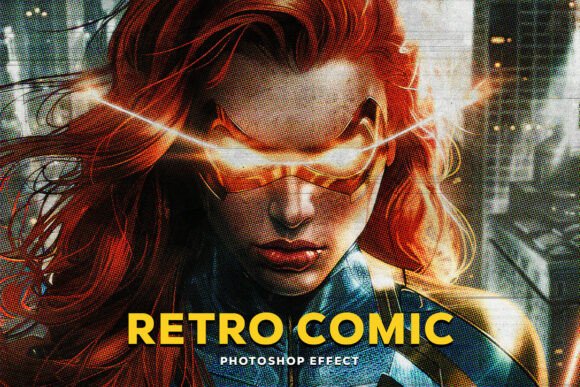
Retro Comic Book Photo Effect: Ink, Dots, and Vintage Charm
There's a certain magic to the pages of a Golden Age comic book. The bold, confident lines, the textured shading of Ben-Day dots, and the slightly off-register printing create a visual language that's both nostalgic and incredibly powerful. It’s a style that screams action, drama, and storytelling. What if you could apply that same iconic treatment to your own photography? The Retro Comic Book Photo Effect is a professional Photoshop toolkit designed to do exactly that, transforming standard images into vibrant, hand-inked illustrations that look like they’ve been plucked from a collector's archive.
Unpacking the Visual Character: More Than Just a Filter
This isn't a simple one-click filter that slaps a comic overlay on your image. It’s a sophisticated system built on smart objects that intelligently analyzes your photo. The process begins with a posterization effect, simplifying your image's tones into sharp, stylized color blocks—mimicking the limited ink palette of vintage printing. From there, the Bold Ink Outlines feature kicks in, detecting edges to create that signature, crisp linework that defines comic art. It’s this attention to detail that separates a professional result from an amateur attempt.
The effect’s personality comes from its layered authenticity. The Ben-Day Halftone Engine doesn't just add random dots; it simulates the actual printing technique, creating realistic texture and depth that you can almost feel. Then, the Integrated Paper Textures apply a subtle, aged newsprint overlay, complete with slight grain and yellowing. This final touch is crucial—it grounds the digital art in a physical, vintage context, enhancing the overall appeal and making the final piece feel like a genuine artifact. The toolkit even includes subtle ink bleed and registration shifts, those happy accidents that gave old comics their unique, handmade character.
Where This Effect Shines: Real-World Applications
The true value of any design asset is measured by its versatility. The Retro Comic Book Photo Effect excels in projects where you need to grab attention, inject personality, and tell a visual story quickly. It’s a powerful tool for building a distinct brand identity, especially for businesses or creators targeting an audience that appreciates nostalgia, boldness, and a touch of retro flair.
Consider its use in marketing and social media graphics. A transformed portrait for a speaker bio or a product shot for an ad campaign instantly becomes a scroll-stopper. The high-contrast, stylized look cuts through the noise of polished, minimalist feeds. For entrepreneurs and small business owners in niches like gaming, pop culture, craft brewing, or vintage apparel, this effect can become a cornerstone of their visual language. It’s perfect for creating eye-catching web design banners, hero images, or about-page portraits that feel unique and memorable.
In editorial design and publishing, it’s a fantastic tool for creating standout feature illustrations, chapter openers, or author headshots in magazines and blogs. Content creators and bloggers can use it to create consistent, branded featured images for articles or video thumbnails. For personal projects, it’s a brilliant way to create unique packaging design for gifts, custom merchandise, or one-of-a-kind art prints. The applications are limited only by the need for a high-impact, narrative-driven visual style.
Making It Work for You: Practical Integration Tips
While the toolkit is designed for ease with its One-Click Smart Objects, thoughtful application yields the best results. Start with a high-resolution source image—good lighting and clear subjects will translate into cleaner ink lines and more impactful posterization. The effect works best on portraits, character shots, and images with strong compositional elements. A cluttered, low-contrast background might muddy the final result.
Think about your project's broader design context. This effect is a dominant display font in visual terms—it commands attention. Therefore, it pairs best with cleaner, more neutral typefaces for body copy. A simple sans serif font or a classic serif font can provide excellent contrast and ensure overall readability in layouts where your comic-style image is the focal point. Avoid pairing it with other highly decorative or script fonts, as this can create visual chaos.
Always test the effect on a small section of your image first to see how the ink lines and halftones interact with specific details. Remember, the goal is to enhance, not obscure. The included high-resolution quality (4500 x 3000 px at 300 DPI) ensures your final output is flawless for both digital screens and large-format print projects, from posters to packaging. Check the included commercial licensing if you plan to use the effect for client work or products for sale—this is a standard step for any premium font or asset to ensure legal compliance.
Ultimately, the Retro Comic Book Photo Effect is more than a novelty; it’s a bridge to a rich visual tradition. It allows designers, marketers, and hobbyists